
Preview "Deliberate Ignorance" in a new window.
This title will be released on .
This eBook is no longer available for sale.
This eBook is not available in your country.
Book Description
Psychologists, economists, historians, computer scientists, sociologists, philosophers, and legal scholars explore the conscious choice not to seek information.
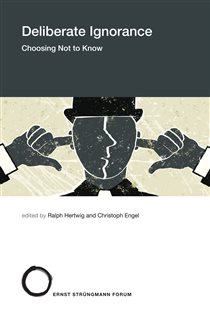
The history of intellectual thought abounds with claims that knowledge is valued and sought, yet individuals and groups often choose not to know. We call the conscious choice not to seek or use knowledge (or information) deliberate ignorance. When is this a virtue, when is it a vice, and what can be learned from formally modeling the underlying motives? On which normative grounds can it be judged? Which institutional interventions can promote or prevent it? In this book, psychologists, economists, historians, computer scientists, sociologists, philosophers, and legal scholars explore the scope of deliberate ignorance.
The history of intellectual thought abounds with claims that knowledge is valued and sought, yet individuals and groups often choose not to know. We call the conscious choice not to seek or use knowledge (or information) deliberate ignorance. When is this a virtue, when is it a vice, and what can be learned from formally modeling the underlying motives? On which normative grounds can it be judged? Which institutional interventions can promote or prevent it? In this book, psychologists, economists, historians, computer scientists, sociologists, philosophers, and legal scholars explore the scope of deliberate ignorance.
In The Press
About the Author
Read on Your Favourite Devices
to find out more
